
One of biology’s biggest mysteries ‘largely solved’ by AI
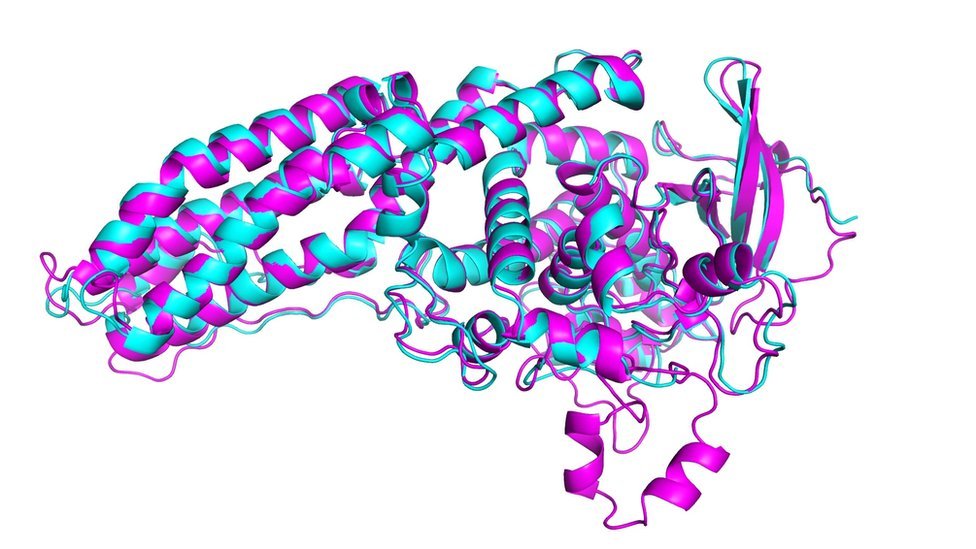
One of biology’s biggest mysteries has been solved using artificial intelligence, experts have announced. Predicting how a protein folds into a unique three-dimensional shape has puzzled scientists for half a century. London-based AI lab, DeepMind, has largely cracked the problem, say the organisers of a scientific challenge.
A better understanding of protein shapes could play a pivotal role in the development of novel drugs to treat disease. The advance by DeepMind is expected to accelerate research into a host of illnesses, including Covid-19. Their program determined the shape of proteins at a level of accuracy comparable to expensive and time-consuming lab methods, they say.
Dr Andriy Kryshtafovych, from University of California (UC), Davis in the US, one of the panel of scientific adjudicators, described the achievement as “truly remarkable”.
“Being able to investigate the shape of proteins quickly and accurately has the potential to revolutionise life sciences,” he said. Source: BBC
Posted in Biology
Comments Off on One of biology’s biggest mysteries ‘largely solved’ by AI
Old Chinese building ‘walks’ to new location
Posted in Interesting
Comments Off on Old Chinese building ‘walks’ to new location
A photon’s journey through a hydrogen molecule is the shortest event ever timed
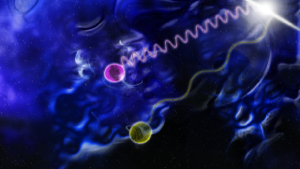 The time it takes for a single particle of light to pass through a hydrogen molecule is now the shortest duration ever measured.
This interval was about 247 zeptoseconds, or trillionths of a billionth of a second, researchers report in the Oct. 16 Science. For comparison, there are as many zeptoseconds in one second as there are seconds in 2,500 times the age of the universe, which is about 13.8 billion years old. The new observation has allowed physicists to witness light-matter interactions at a whole new level of detail.
The physicists shined particles of X-ray light on hydrogen molecules in a gas. As each light particle, or photon, crossed an H2 molecule, it booted an electron from one hydrogen atom, then the other. Because electrons can exhibit wavelike behavior (SN: 5/3/19), the two ejection events stirred up electron waves that spread out and merged — similar to ripples formed by a stone skipped twice over a pond. The overlapping crests and troughs of those waves created an interference pattern, which the researchers observed using an instrument called a reaction microscope (SN: 11/5/10).
If the electron waves had formed simultaneously, the interference pattern would have been symmetric around the center of the H2 molecule. But because one electron wave formed slightly before the other and had more time to spread out, the pattern shifted toward the second wave, says study coauthor Sven Grundmann, a physicist at Goethe University in Frankfurt, Germany.
This shift let the researchers calculate the 247-zeptosecond time delay between the emission of the two electron waves. That matched the team’s expectations based on the speed of light and known diameter of a hydrogen molecule.
Past experiments have observed particle interactions as short as attoseconds (SN: 3/12/10), which are 1,000 times as long as zeptoseconds. Source: Sciencenews
Posted in Physics
Comments Off on A photon’s journey through a hydrogen molecule is the shortest event ever timed
Earliest evidence for humans in the Americas
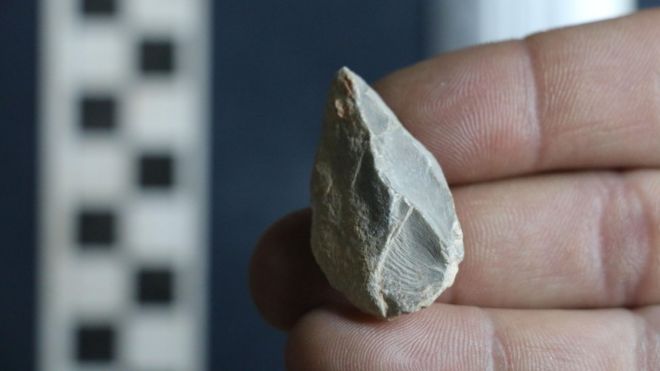
Humans settled in the Americas much earlier than previously thought, according to new finds from Mexico.
They suggest people were living there 33,000 years ago, twice the widely accepted age for the earliest settlement of the Americas.
The results are based on work at Chiquihuite Cave, a high-altitude rock shelter in central Mexico.
Archaeologists found nearly 2,000 stone tools, suggesting the cave was used by people for at least 20,000 years.
Ice age
During the second half of the 20th Century, a consensus emerged among North American archaeologists that the Clovis people had been the first to reach the Americas, about 11,500 years ago.
The ancestors of the Clovis were thought to have crossed a land bridge linking Siberia to Alaska during the last ice age.
This land bridge - known as Beringia - subsequently disappeared underwater as the ice melted.
And these big-game hunters were thought to have contributed to the extinction of the megafauna - large mammals such as mammoth, mastodon and various species of bear that roamed the region until the end of the last ice age. More here: BBC
Posted in Evolution
Comments Off on Earliest evidence for humans in the Americas
For The First Time, Scientists Have Completely Sequenced a Human Chromosome
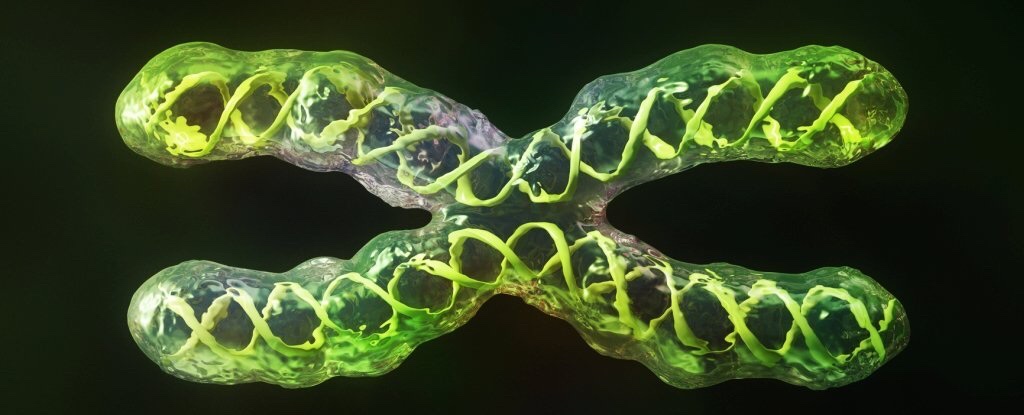
In 2003, history was made. For the first time, the human genome was sequenced. Since then, technological improvements have enabled tweaks, adjustments, and additions, making the human genome the most accurate and complete vertebrate genome ever sequenced.https://68e047f151a71081e59a4b1cc9700e29.safeframe.googlesyndication.com/safeframe/1-0-37/html/container.html
Nevertheless, some gaps remain - including human chromosomes. We have a pretty good grasp of them in general, but there are still some gaps in the sequences. Now, for the first time, geneticists have closed some of those gaps, giving us the first complete, gap-free, end-to-end (or telomere-to-telomere) sequence of a human X chromosome.
The accomplishment was enabled by a new technique called nanopore sequencing, which enables ultra-long-reads of DNA strands, providing a more complete and sequential assembly.
This is in contrast to previous sequencing techniques, in which only short sections could be read at a time. Previously, geneticists had to piece together these sections like a puzzle.
While they were pretty good at this, the pieces tend to look the same, so it’s very tricky to know if you’re getting it right - not just the right order, but how many repeats there are in the sequence. And, of course, there are minute gaps.
“We’re starting to find that some of these regions where there were gaps in the reference sequence are actually among the richest for variation in human populations, so we’ve been missing a lot of information that could be important to understanding human biology and disease,” said satellite DNA biologist Karen Miga of the University of California Santa Cruz Genomics Institute.
Posted in Uncategorized
Comments Off on For The First Time, Scientists Have Completely Sequenced a Human Chromosome
‘Black neutron star’ discovery changes astronomy
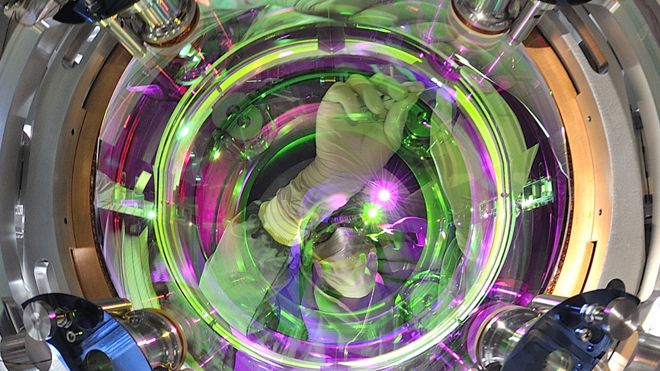
Scientists have discovered an astronomical object that has never been observed before.
It is more massive than collapsed stars, known as “neutron stars”, but has less mass than black holes.
Such “black neutron stars” were not thought possible and will mean ideas for how neutron stars and black holes form will need to be rethought.
The discovery was made by an international team using gravitational wave detectors in the US and Italy.
Charlie Hoy, a PhD student from Cardiff University, UK, involved in the study, said the new discovery would transform our understanding.
“We can’t rule out any possibilities,” he told BBC News. “We don’t know what it is and this is why it is so exciting because it really does change our field.”
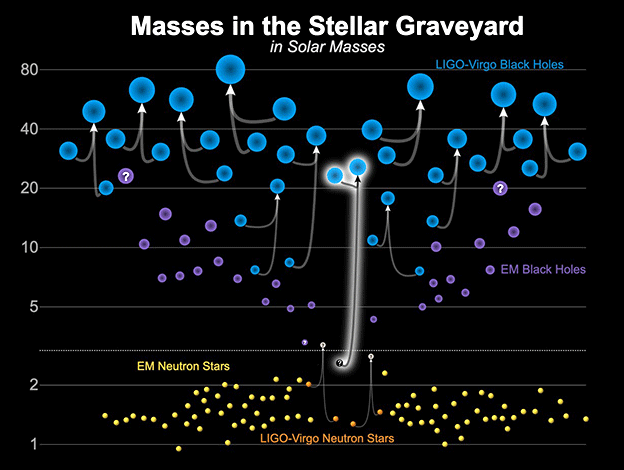
This event involved an object more massive than known neutron stars but less massive than known black holes. It existed in what has become known as the “mass gap”
More here: BBC
Posted in Cosmology
Comments Off on ‘Black neutron star’ discovery changes astronomy
Synthetic red blood cells mimic natural ones, and have new abilities
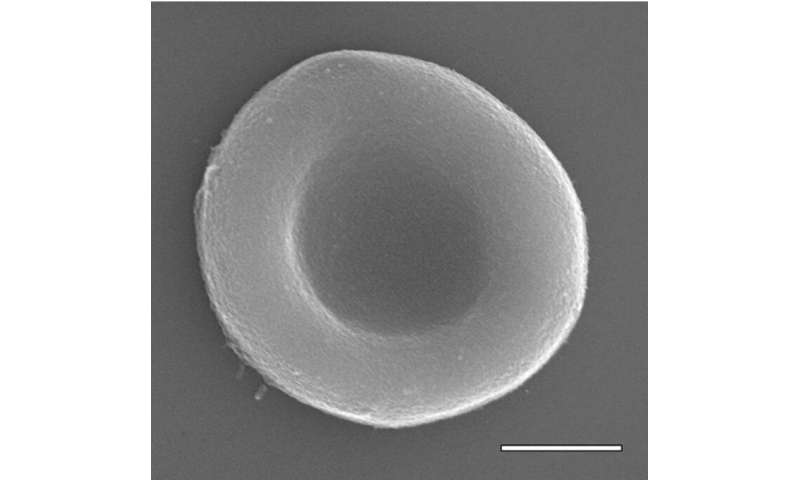
Scientists have tried to develop synthetic red blood cells that mimic the favourable properties of natural ones, such as flexibility, oxygen transport and long circulation times. But so far, most artificial red blood cells have had one or a few, but not all, key features of the natural versions. Now, researchers reporting in ACS Nano have made synthetic red blood cells that have all of the cells’ natural abilities, plus a few new ones.
Red blood cells (RBCs) take up oxygen from the lungs and deliver it to the body’s tissues. These disk-shaped cells contain millions of molecules of haemoglobin—an iron-containing protein that binds oxygen. RBCs are highly flexible, which allows them to squeeze through tiny capillaries and then bounce back to their former shape. The cells also contain proteins on their surface that allow them to circulate through blood vessels for a long time without being gobbled up by immune cells. Wei Zhu, C. Jeffrey Brinker and colleagues wanted to make artificial RBCs that had similar properties to natural ones, but that could also perform new jobs such as therapeutic drug delivery, magnetic targeting and toxin detection.
The researchers made the synthetic cells by first coating donated human RBCs with a thin layer of silica. They layered positively and negatively charged polymers over the silica-RBCs, and then etched away the silica, producing flexible replicas. Finally, the team coated the surface of the replicas with natural RBC membranes. The artificial cells were similar in size, shape, charge and surface proteins to natural cells, and they could squeeze through model capillaries without losing their shape. In mice, the synthetic RBCs lasted for more than 48 hours, with no observable toxicity. The researchers loaded the artificial cells with either haemoglobin, an anticancer drug, a toxin sensor or magnetic nano-particles to demonstrate that they could carry cargoes. The team also showed that the new RBCs could act as decoys for a bacterial toxin. Future studies will explore the potential of the artificial cells in medical applications, such as cancer therapy and toxin bio-sensing, the researchers say. Source: Phys.org
Fly through 17th century London before The Great Fire
Posted in History
Comments Off on Fly through 17th century London before The Great Fire
25 Facts you might not know
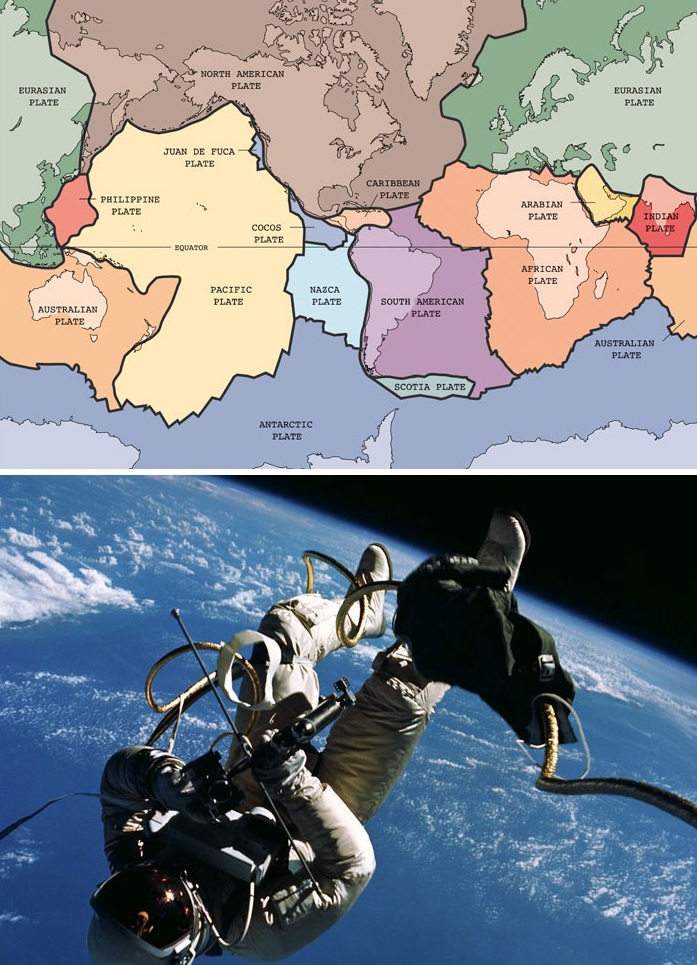
No.1 In 1967, NASA was already exploring space. At the same time, scientists finally agreed on tectonic plates.
No.2 Calculus was invented years after Harvard University was established
No.3 Barack Obama won the election the year the last widow of a civil war veteran passed away.
No.4 Auschwitz prisoners didn’t know the taste of McDonald’s which was founded days after they were sent there in 1940.
No.5 Ecstasy was made the year the Titanic sank in 1912.
No.6 Mother Teresa died 5 days after Princess Diana died on August 31, 1997.
No.7 London Underground used to be transportation that also took sight seekers to see public hangings.
No.8 The Oregon trail was first trodden by wagon in 1843, the year when fax machines were invented.
No.9 Swiss women were granted their rights to vote during the year NASA drove a buggy on the moon in 1971.
No.10 Pilgrims made it Plymouth Rock when ‘Palace of the Governors’ was already erected in New Mexico.
No.11 The last person on death row for the guillotine in France died when Star Wars came out in 1977.
No.12 This Bristlecone Pine is the oldest tree alive and was 1,000 years old when Woolly Mammoths died out.
No.13 Anne Frank was the same age as Martin Luther King (1929).
No.14 Japanese were playing Nintendo when Jack the Ripper was still haunting London in 1889.
No.15 George Washington did not know the existence of dinosaurs as he died in 1799, 25 years before the first fossil was found.
No.16 Oxford University is hundreds of years older than The Aztec Empire (1428)
No.17 The Egyptians were building the Pyramid in 2660 BCE when Mammoths were still roaming the earth.
No.18 Harriet the tortoise who passed away back in 2016. Is the only tortoise who saw Charles Darwin in person.
No.19 Marilyn Monroe and Queen Elizabeth are shaking hands here during a movie premiere in London, 1956. They were both 30 then.
No.20 America’s 10th President, John Tyler (Born: 29 March 1790) has two grandchildren who are still alive today, in 2020.
No.21 The Eiffel tower was inaugurated in 1889 for the world’s fair, which was the same year Van Gogh’s ‘Starry Night’ was painted
No.22 the first underground line in London was opened on January 10, 1863. at that time, the civil war was still raging in the united states
No.23 Harry Potter and the deathly hallows was published in the summer of 2007. the same summer the first iphone model was released
No.24 The Brooklyn bridge was being built during the battle of little bighorn (1876)
No.25 Microsoft was founded while spain was still a fascist dictatorship (1975)
Source: Brighthumanity
Posted in Interesting
Comments Off on 25 Facts you might not know
Landmark skull fossil provides surprising human evolution clues
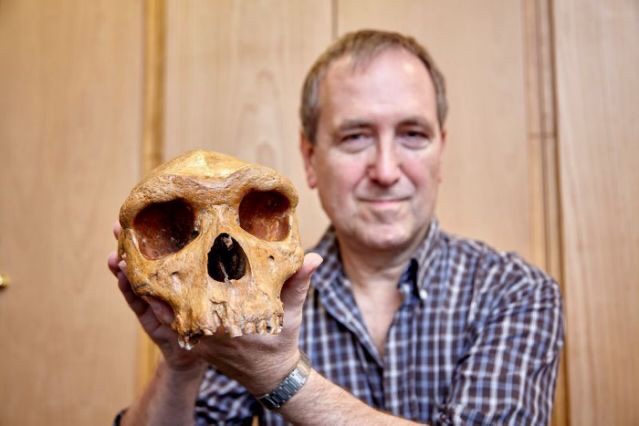
Scientists have solved a longstanding mystery over the age of a landmark skull found in 1921 in Zambia - the first fossil of an extinct human species discovered in Africa - in research with big implications for deciphering the origin of our own species.
The study published on Wednesday involved the so-called Broken Hill skull, also called the Kabwe skull in recognition of a nearby town, discovered by a Swiss miner working in the Broken Hill lead and zinc mine in what was then Northern Rhodesia. Until now, scientists had been in the dark about how old it was, making it difficult to know its place on the human family tree.
But two sophisticated dating methods have determined the skull to be about 299,000 years old, plus or minus 25,000 years, said geochronologist Rainer Grün of Griffith University in Australia, lead author of the study published in the journal Nature. Some experts had hypothesized it was 500,000 years old.
This indicates the species represented by the skull was unlikely to have been a direct ancestor of Homo sapiens as some had thought. Our species first appeared more than 300,000 years ago in Africa, later spreading worldwide.
Scientists initially assigned the skull to a species they called Homo rhodesiensis. Most scientists now assign it to the species Homo heidelbergensis, which inhabited parts of Africa and Europe starting about 600,000 years ago.
Anthropologist Chris Stringer of the Natural History Museum in London said its age indicates at least three human species inhabited Africa around 300,000 years ago: Homo sapiens in places like Morocco and Ethiopia, Homo heidelbergensis in south-central Africa, and Homo naledi in South Africa, known for primitive features including traits suitable for tree-climbing.
Instead of linear evolution in which a new species supplants its predecessor, Africa may have been “a melting pot” involving interbreeding among multiple human species, the researchers said.
The skull, dubbed Rhodesian Man when it was discovered, possesses primitive features such as a large face, flat forehead and huge brow ridges. Its brain size fits in the range of our species.
“It’s a surprisingly late age estimate, as a fossil at about 300,000 years might be expected to show intermediate features between Homo heidelbergensis and Homo sapiens, but Broken Hill shows no significant features of our species,” said Stringer, a study co-author.
“Also, the latest research suggests that the facial shape of Homo heidelbergensis fossils does not fit an ancestral pattern for our species,” Stringer added.
The skull’s discovery provided the first evidence indicating the accuracy of British naturalist Charles Darwin’s prediction a half century earlier that humans originated in Africa because African apes were our closest living relatives. Prehistoric human fossils until that time all had been found in Europe and Asia. Source: Yahoo
Posted in Evolution
Comments Off on Landmark skull fossil provides surprising human evolution clues
The Next Outbreak - Bill Gates 2015
If we ever need a World President this man gets my vote.
In 2014, the world avoided a horrific global outbreak of Ebola, thanks to thousands of selfless health workers — plus, frankly, thanks to some very good luck. In hindsight, we know what we should have done better. So, now [2015] is the time, Bill Gates suggests, to put all our good ideas into practice, from scenario planning to vaccine research to health worker training. As he says, “There’s no need to panic … but we need to get going.”
Posted in Education, Interesting, Medical
Comments Off on The Next Outbreak - Bill Gates 2015
Three human-like species lived side-by-side in ancient Africa
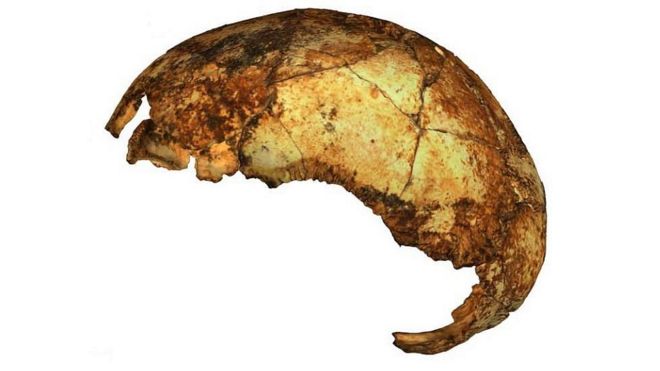
Two million years ago, three different human-like species were living side-by-side in South Africa, a study shows. The findings underline a growing understanding that the present-day situation, where one human species dominates the globe, may be unusual compared with the evolutionary past.The new evidence comes from efforts to date bones uncovered at a cave complex near Johannesburg.
The research has been published in the journal Science.
The new work also revealed the earliest known example of Homo erectus, a species thought to be a direct ancestor of modern humans (Homo sapiens). The three groups of hominins (human-like creatures) belonged to Australopithecus (the group made famous by the “Lucy” fossil from Ethiopia), Paranthropus and Homo - better known as humans.
Andy Herries, from LaTrobe University in Melbourne, Australia, and colleagues evaluated remains found at the Drimolen Cave Complex using three different scientific dating techniques: electron spin resonance, palaeomagnetism and uranium-lead dating. Source: BBC
Posted in Evolution
Comments Off on Three human-like species lived side-by-side in ancient Africa
What is the universe really made of?
Posted in Physics
Comments Off on What is the universe really made of?
Are Neanderthals the same species as us?
By Chris Stringer - First published 1 October 2019
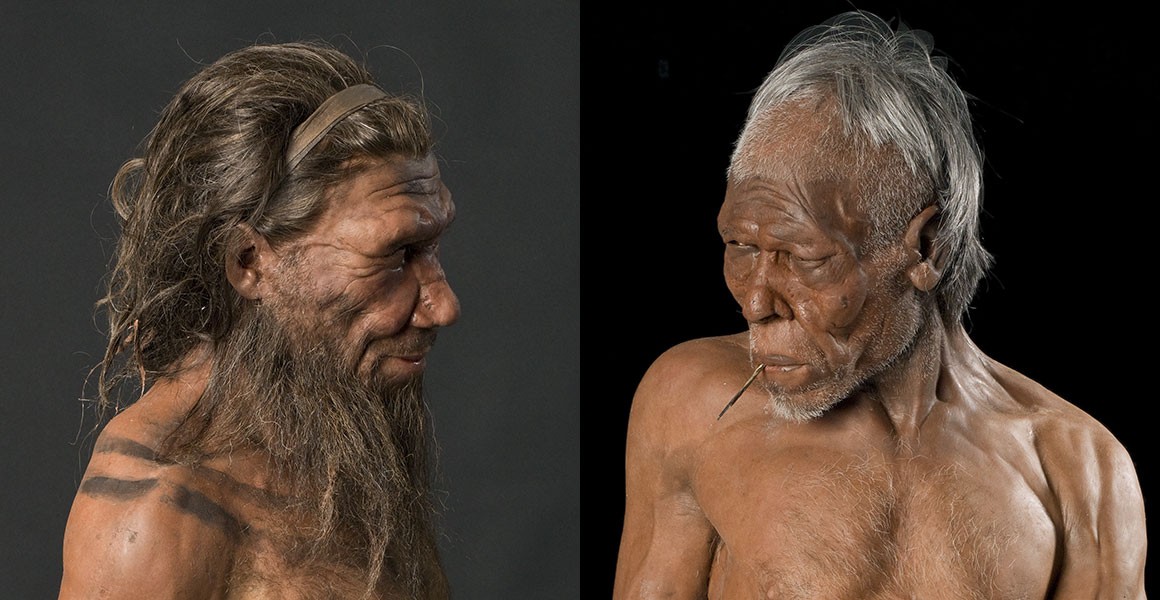
Museum human evolution expert Prof Chris Stringer, who has been studying Neanderthals and early modern humans for about 50 years, tackles the big question of whether we belong to the same species.
Everyone on the planet today, whatever they look like and wherever they live, is classified by biologists in the species Homo sapiens. But some commentators are now suggesting that the extinct Neanderthals with their heavy brows and big noses should be classified in our species as well.
So what defines our species, and who qualifies to join the club?
An expanding family tree
When I drew up a family tree covering the last one million years of human evolution in 2003, it contained only four species: Homo sapiens (us, modern humans), H. neanderthalensis (the Neanderthals), H. heidelbergensis (a supposedly ancestral species), and H. erectus (an even more ancient and primitive species). I have just published a new diagram covering the same period of time and it shows more than double the number of species, including at least four that were around in the last 100,000 years.
Scientists currently recognise as many as nine human species from the past one million years, including the recently discovered Homo luzonensis, which was announced in April 2019. This diagram showing their inferred age ranges was published in the Journal of Quaternary Science in August 2019.
Named by Linnaeus
Our species name (which means ‘wise humans’ - though we might question the wisdom of that name today) was given to us by that great Swedish classifier Carl Linnaeus in 1758. In those pre-evolutionary times, species were usually considered to be fixed identities, created by God.
Grouping living things in species allows biologists to study aspects of life ranging from our own evolutionary history to the conservation of rain forests in the Amazon.
Today we still recognise each species by its own special features.
How do Homo sapiens and Neanderthals differ?
The physical traits of Homo sapiens include a high and rounded (‘globular’) braincase, and a relatively narrow pelvis.
Measurement of our braincase and pelvic shape can reliably separate a modern human from a Neanderthal - their fossils exhibit a longer, lower skull and a wider pelvis.
Even the three tiny bones of our middle ear, vital in hearing, can be readily distinguished from those of Neanderthals with careful measurement. In fact the shape differences in the ear bones are more marked, on average, than those that distinguish our closest living relatives - chimpanzees and gorillas - from each other.
Comparison of Neanderthal (left) and modern human (right) skulls, from a display in Cleveland Museum of Natural History. Adapted from a derivative work by DrMikeBaxter (CC BY-SA 2.0) via Wikimedia Commons.
Pronounced differences in the braincase, ear bones and pelvis can still be recognised in fossils of Neanderthals and modern humans from 100,000 years ago. This suggests a separate evolutionary history going back much further - so far so good for differentiating H. neanderthalensis from H. sapiens.
Complications come when we consider a particular definition of species - one which Linnaeus did not develop, but which he probably would have appreciated.
The biological species concept
The biological species concept states that species are reproductively isolated entities - that is, they breed within themselves but not with other species. Thus all living Homo sapiens have the potential to breed with each other, but could not successfully interbreed with gorillas or chimpanzees, our closest living relatives.
On this basis, ‘species’ that interbreed with each other cannot actually be distinct species.
Critics who disagree that H. neanderthalensis and H. sapiens are two separate species can now cite supporting evidence from recent genetic research. This indicates that the two interbred with each other when they met outside Africa about 55,000 years ago. As a result, everyone today whose ancestors lived outside Africa at that time has inherited a small but significant amount of Neanderthal DNA, which makes up about 2% of their genomes.
I still believe they are distinct species
In the face of this seemingly decisive evidence, why do I cling to my belief that Neanderthals and Homo sapiens are distinct species?
Well, in my view the problem is not with ancient couplings between our ancestors and Neanderthals, but with the limitations of the biological species concept.
We now know from the same kind of genomic research that many other species of mammal interbreed with each other - for example different kinds of baboons (genus Papio), wolves and wild dogs (Canis), bears (Ursus) and large cats (Panthera). In addition, one recent estimate suggests that at least 16% of all bird species interbreed with each other in the wild.
A puma-leopard hybrid. You can see this specimen on display at the Museum at Tring. We now know that many mammal species can interbreed.
Thus the problem is not with Neanderthals and modern humans and all the other species that interbreed with each other, but with the biological species concept itself. It is only one of dozens of suggested species concepts, and one that is less useful in the genomic age, with its profuse demonstrations of inter-species mixing. The reality is that in most cases in mammals and birds, species diverge from each other gradually. It may take millions of years for full reproductive isolation to develop, something that clearly had not yet occurred for H. neanderthalensis and H. sapiens.
In my view, if Neanderthals and Homo sapiens remained separate long enough to evolve such distinctive skull shapes, pelvises, and ear bones, they can be regarded as different species, interbreeding or not.
Humans are great classifiers, and we do like to keep things orderly. But we should not be surprised when the natural world (past and present) does not match up to our neat and simple schemes.
Behaviour is irrelevant here
But what about the archaeological evidence that is also commonly cited in favour of uniting the Neanderthals with us as Homo sapiens - that they had ‘cultural’ behaviours such as burying their dead and painting designs on the walls of caves?
Well, interesting as that is, it should be excluded from the biological classification of species, since behaviours are potentially more plastic, evolve more quickly, and spread more easily within and between species than traits based on anatomy and DNA. Source: NHM
Posted in Evolution
2 Comments
How to change eight wheels in 9 seconds
Posted in Formula 1
Comments Off on How to change eight wheels in 9 seconds
Scientists discover powerful antibiotic using AI
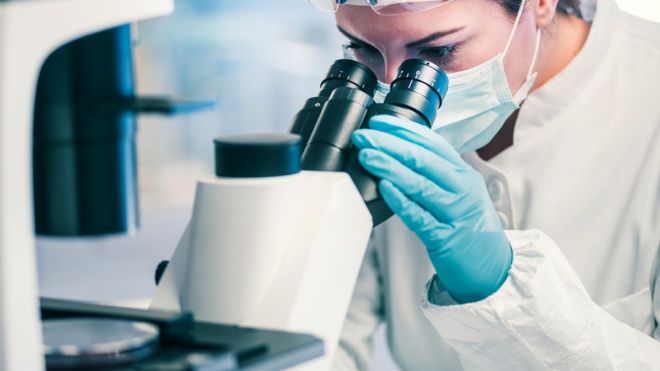
In a world first, scientists have discovered a new type of antibiotic using artificial intelligence (AI). It has been heralded by experts as a major breakthrough in the fight against the growing problem of drug resistance.
A powerful algorithm was used to analyse more than one hundred million chemical compounds in a matter of days. The newly discovered compound was able to kill 35 types of potentially deadly bacteria, said researchers.
Antibiotic-resistant infections have risen in recent years - up 9% in England between 2017 and 2018, to nearly 61,000. If antibiotics are taken inappropriately, harmful bacteria living inside the body can become resistant to them, which means the medicines may not work when really needed.
The World Health Organization (WHO) has called the phenomenon “one of the biggest threats to global health security and development today”.
‘A new age’
“In terms of antibiotic discovery, this is absolutely a first,” said Regina Barzilay, a senior researcher on the project at the Massachusetts Institute of Technology (MIT).
The discovery was made using an algorithm inspired by the architecture of the human brain.
Scientists trained it to analyse the structure of 2,500 drugs and other compounds to find those with the most anti-bacterial qualities that could kill E. coli. They then selected around 100 candidates for physical testing before discovering halicin.
“I think this is one of the more powerful antibiotics that has been discovered to date,” said James Collins, a bioengineer on the team at MIT. “We wanted to develop a platform that would allow us to harness the power of artificial intelligence to usher in a new age of antibiotic drug discovery.”
Dr Peter Bannister, chairman of the Institution of Engineering and Technology healthcare panel, said the method used was already “well established” within medical research. Source: BBC
Posted in Medical
Comments Off on Scientists discover powerful antibiotic using AI
Incredible carved wooden spiral staircase in Peleş Castle, Romania
Source: The Fabulous Weird Trotter
Posted in Arts
Comments Off on Incredible carved wooden spiral staircase in Peleş Castle, Romania


